Value proposition – Subpage content
A product's value proposition gives a customer a reason to buy it. As simple as it may sound, it helps to clearly define, structure, and communicate the brand and product's offer to the customers in plain words.
What is
Value proposition?
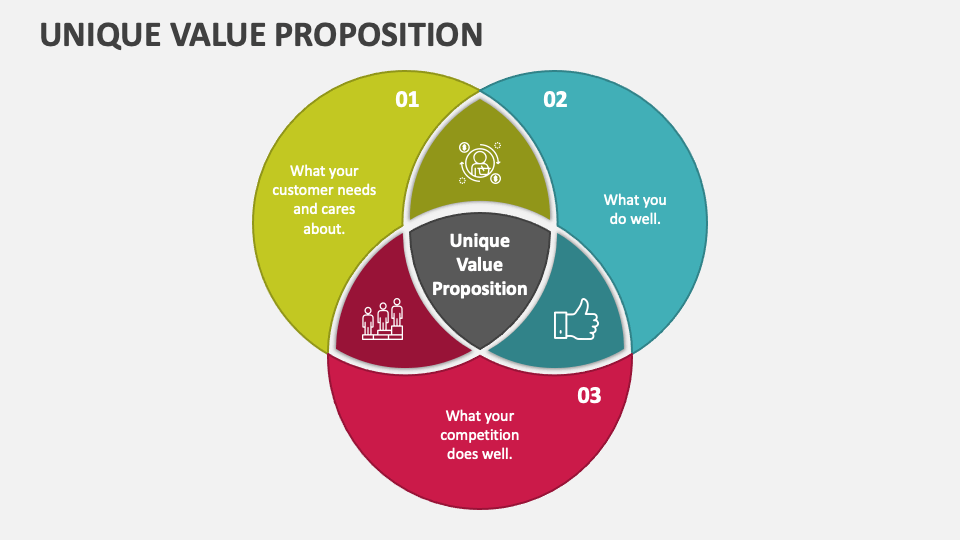
The value proposition is a framework that helps formulate a precise definition of what value you offer to your customers. It primarily focuses on the product or service benefits answering particular cusomers' needs and problems.
This way, you don’t leave room for misunderstanding, ambiguity, overpromise, or understatements and don't overcommunicate just the features. Once it’s done, it will help you build your product and communicate it to the world more consistently the way it will sell.
Find your product’s value
→ with Value Proposition
The world is filled with an overwhelming amount of messages about products and services that promise to improve our lives. As consumers, we make numerous decisions every day about whether to buy something or not. When creating a digital product, it's important to recognize that this is the battleground where you need to compete for customer attention.
Clear message
Value proposition helps you define precisely and accurately what you are trying to sell to your customer. It's important to communicate with the customer using their own language and terms to ensure clear understanding.
Standing out of the crowd
Not many companies establish effective communication with their customers, which is where you can gain a significant advantage. Remember to not use cliche wording but instead reach the customer with a distinctive message.
Resonating with heart & mind
The value proposition, combined with the unique brand’s tone of voice, helps formulate a language and tonality that simply clicks with your target customer. And, everyone knows that when a customer resonates with a product on an emotional level, it is already a win for you.
A strategic compass for your organisation
If you want to build a consistent product, it's crucial that your entire team grasps its true value. When customers see that everyone in your company truly comprehends and communicates the real value of your product, they'll be more likely to choose it.
Our approach to
Value proposition development
When it comes to creating product concepts, we're your guy. As a team of field-tested, experienced experts, we’ve developed our own approach, which consists of 5 stages:
- Deep dive into your product and customer
At the beginning of our cooperation, we work hand in hand with all product stakeholders, to understand your vision, objectives, and challenges, aligning with your digital business strategy.
- Benchmark research
Once we get familiar with your vision, objectives, and challenges, it’s time to find inspiration. In this phase, we conduct extensive desktop and competition research to explore the best solutions and benchmarks in your industry.
- Product value proposition exploration
Not to brag, but our creative workshops are vibrant spaces where ideas flow freely. Through collaborative brainstorming sessions, we tap into the collective great mindsets of our team and stakeholders to uncover the true core of what your product has to offer to the customer.
- Cooperation with strategists and copywriters
We work internally with a team of strategists and copywriters to define and design product value proposition that you can easily test with your customers. We try to stay open-minded and include your ideas as well as market research insights. After all, it is all about a collaboration between you and us.
- Validation and discovery of new features
Even the the worked out value proposition has to prove itself in a field. To validate and discover new features, we conduct both quantitative and qualitative research with users. It shows us all the strong and weak points of our ideas and puts the spotlight on areas that need improvements. Basically, everything that has been created is tested in the field.
With Value Proposition framework in your toolbox, you'll boost your chances of market success and eliminate the risk of wasting resources on unsuccessful features.
Post a comment